


Blockchain-based systems have changed how digital assets are stored, transferred, and managed. As organizations move from simple token transfers to complex financial operations, traditional crypto wallets often feel limited. This gap has led to the rise of the smart contract wallet.
A smart contract wallet is not just a place to hold assets. It is a programmable account that follows rules written directly on the blockchain. These rules define how transactions occur, who can approve them, and under what conditions funds can move. This structure gives businesses and users more control, better security, and greater flexibility.
You may hear this referred to as a smart wallet crypto solution. The idea is the same. Logic replaces manual handling, and automation replaces risk-prone actions. For enterprises managing funds across teams or platforms, this shift matters.
Traditional wallets rely solely on private keys. Lose the key, and the assets are gone. Smart contract wallets introduce recovery methods, approval flows, and limits that align better with real operational needs. This is why smart contract wallets are becoming a core building block in modern blockchain systems.
A smart contract wallet is a blockchain account controlled by a deployed smart contract rather than a single private key. The contract defines how the wallet behaves. Every transaction must follow the logic written into that contract.
In a regular wallet, signing a transaction is enough to move funds. In a smart contract wallet, signing is only one step. The contract checks rules such as required approvals, spending limits, or time-based conditions before allowing execution.
The role of smart contracts here is central. They hold the wallet logic on-chain. This logic can include multi-user permissions, recovery flows, transaction batching, or automated actions. Once deployed, the rules are enforced by the blockchain itself, not by any third party.
Wallet rules are written in smart contract code and deployed on networks such as Ethereum or compatible chains. Because the rules are public and verifiable, users and auditors can confirm how the wallet operates. This transparency builds trust, especially in enterprise and institutional use cases.
For businesses, this structure turns the wallet from a simple storage tool into an operational account with built-in governance.

Understanding how smart contract wallets function helps explain why they are gaining traction across industries.

At the core, the wallet itself is a smart contract deployed on the blockchain. This contract holds the wallet balance and defines valid actions.
When a transaction is initiated, the contract checks predefined conditions. These may include signature verification from multiple parties, spending thresholds, or specific time windows. If the conditions are satisfied, the transaction proceeds. If not, it fails automatically. This approach removes ambiguity. Rules are executed exactly as written. There is no room for interpretation or manual overrides.
From a user perspective, interaction feels similar to traditional wallets, but with additional safeguards. A user signs a request using their private key or connected device. That signature is sent to the smart contract.
The contract then evaluates the request. It may wait for additional signatures, verify limits, or trigger linked actions. Only after validation does the contract execute the transaction. This layered flow reduces risk while maintaining usability. Many modern interfaces abstract the complexity so users see a clean experience.
Smart contract wallets require gas fees for execution, just like any blockchain transaction. Since logic runs on-chain, gas usage can be higher than for simple transfers. Cost per transaction depends on contract complexity and network conditions. Enterprises must account for this when designing wallet logic. Efficient contract design reduces recurring costs.
Some smart contract wallets support sponsored gas models or batching to manage fees. These options make them practical even for frequent operations.
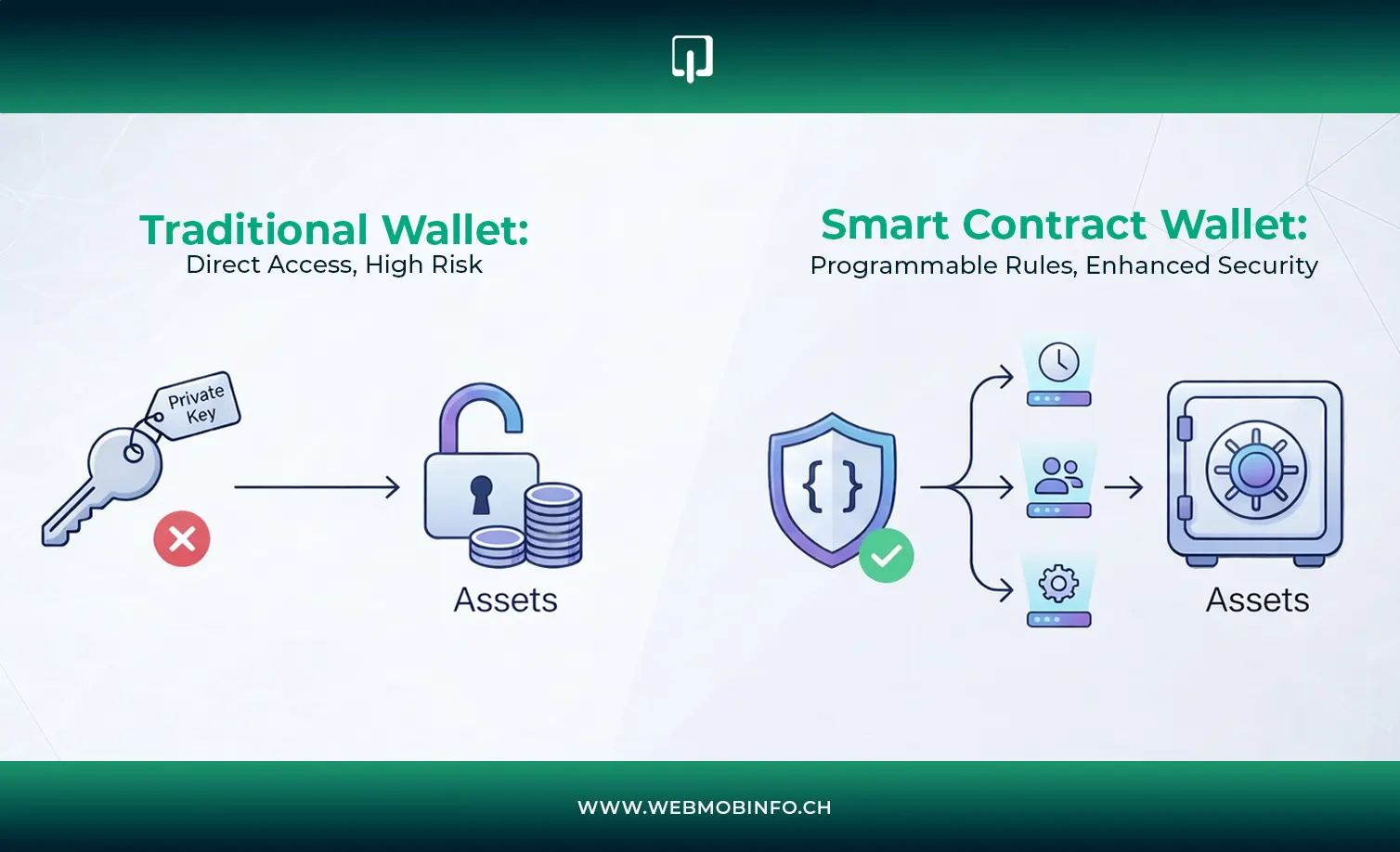
For enterprises, these differences translate into lower operational risk and better governance.
Not all smart contract wallets are built the same. Choice depends on business goals, timeline, and budget.
A Custom Smart Contract Wallet is built from scratch to meet specific requirements. Logic is designed around internal processes, compliance needs, and user roles.
This approach suits enterprises with complex approval flows or integration needs. Startups building unique platforms also benefit from custom designs.
Custom development allows full control over features, security layers, and future updates. It requires deeper planning and higher upfront investment.
White-label crypto wallet solutions provide a faster route to market. Core functionality is prebuilt, with branding and selected features customized.
This model works well for businesses that need reliable wallet features without long development cycles. It reduces initial risk and cost.
White-label options make sense when the requirements align with standard wallet capabilities. They also support quicker scaling and testing.
Both models have merit. The right choice depends on long-term strategy and internal capacity.
Smart contract wallets are used across many blockchain-driven operations that require control, security, and automation. Below are the most relevant and practical use cases, explained clearly.
Smart contract wallets allow DeFi users to manage assets with built-in safeguards. Features such as spending limits, multi-signature approvals, and automated interactions reduce risk when interacting with lending, staking, or Decentralized Finance protocols and trading protocols.
DAOs use smart contract wallets to transparently manage shared funds. Approval rules ensure that no single member can move funds alone, while on-chain logic keeps all treasury actions visible and verifiable.
Businesses holding cryptocurrencies or tokenized assets use smart contract wallets to apply internal controls. Role-based access, transaction approvals, and audit-ready records support compliance and financial governance.
Web3 platforms integrate smart contract wallets to simplify user onboarding. Users can interact with Web3 applications without directly managing private keys, improving usability while maintaining non-custodial ownership.
Organizations with distributed teams rely on smart contract wallets to manage shared accounts. Approval workflows ensure accountability and reduce operational risk when multiple users handle funds.
Security remains a critical focus. Smart contract audits are essential before deployment. Audits identify logic flaws and potential attack vectors.
Common vulnerabilities include incorrect access controls, flawed recovery logic, and gas-related risks. Addressing these early prevents costly issues later.
A secure wallet architecture balances flexibility with strict permission controls. Overly complex logic can increase risk if not carefully reviewed.
Experienced developers play a key role here. Teams with deep blockchain expertise design contracts that are both functional and resilient.
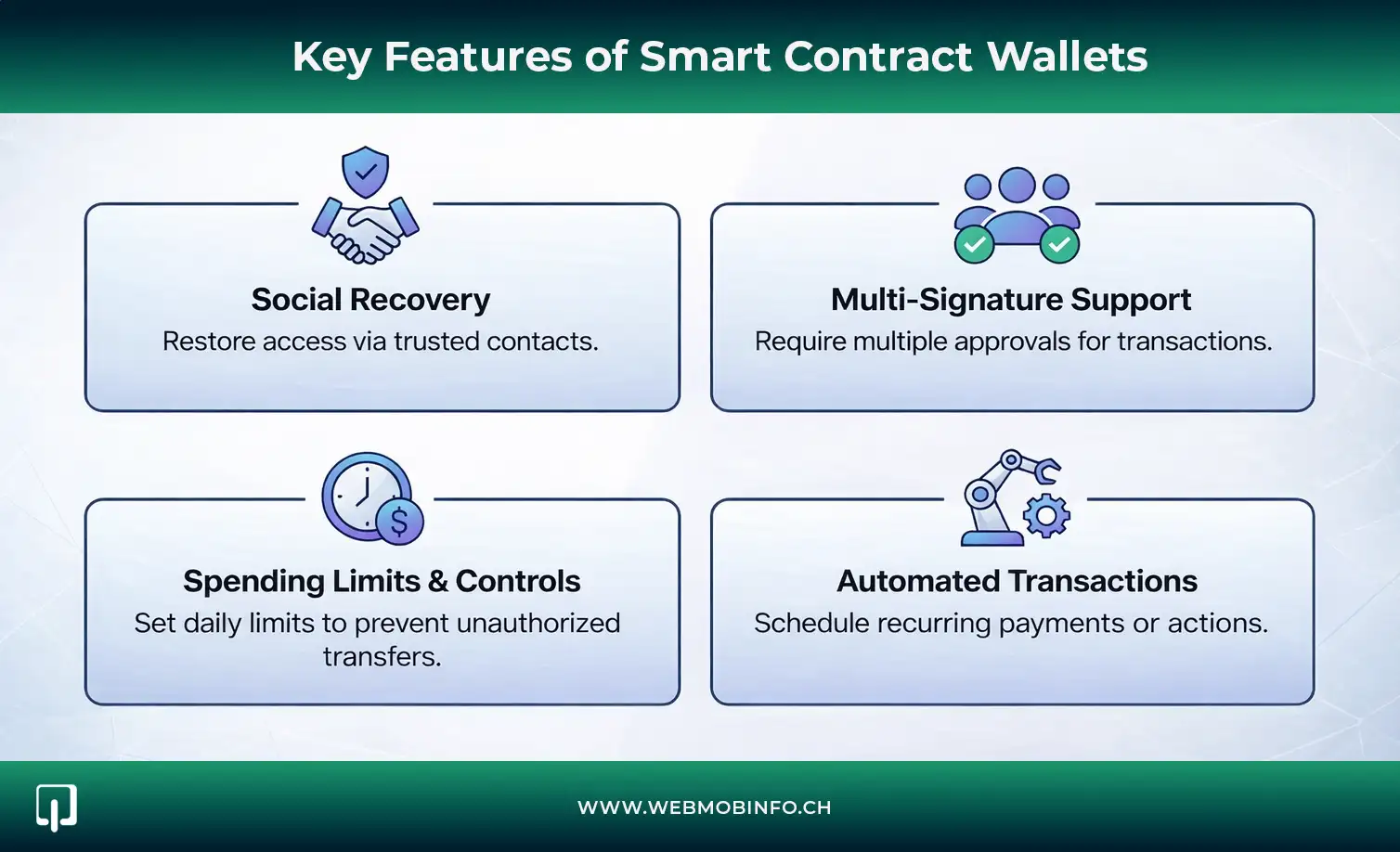
Together, these features define what a smart wallet crypto solution aims to achieve. Control without complexity.
The cost to build a smart contract wallet varies widely based on several factors.
Development scope influences cost. Simple wallets cost less than multi-role enterprise systems.
Custom development costs more upfront than white-label options. However, it offers long-term flexibility.
Smart contract complexity directly affects development and audit expenses. More logic means more testing.
Security audits are a necessary investment. Skipping audits increases long-term risk and potential losses.
Ongoing maintenance and updates also factor into the total cost. Enterprises should plan for lifecycle expenses, not just initial deployment.
Understanding these elements helps set realistic budgets and expectations.
Selecting the right development partner is a critical decision. Smart contract wallets manage real value, and even minor design errors can pose financial risk. The points below outline what businesses should evaluate before making this choice.
Look for a team with direct experience building and deploying smart contract wallets. Practical exposure to wallet logic, transaction flows, and permission controls matters more than generic blockchain experience.
A reliable partner prioritizes secure contract design and supports third-party audits. They should be familiar with common attack vectors and be able to design logic that reduces exposure.
The right partner translates operational requirements into on-chain rules. This includes approval hierarchies, spending controls, recovery options, and reporting needs.
A capable team can advise whether a Custom Smart Contract Wallet or white-label crypto wallet solution is more suitable. They should support both approaches without pushing a one-size option.
Transparent timelines, clear documentation, and regular updates are essential. Wallet logic must be understandable for internal teams and future audits.
Smart contract wallets require maintenance as protocols and standards change. Choose a partner that offers ongoing support, upgrades, and performance reviews.
Choosing the right partner ensures that your smart contract wallet is secure, practical, and aligned with long-term business goals.
Specialized Technical Expertise: A smart contract wallet development company brings focused experience in wallet logic, permission controls, and on-chain execution. This reduces design errors and ensures the wallet functions reliably under real operational conditions.
Security-First Development Approach: Professional teams follow structured security processes, including threat modeling and audit preparation. This helps protect digital assets and reduces exposure to contract-level risks.
Long-Term Reliability and Support: Development companies provide ongoing maintenance, upgrades, and technical support. This ensures the wallet remains compatible with network updates and business requirements over time.
Smart contract wallets are moving from advanced tooling into practical infrastructure for blockchain-based operations. As usability improves and security models mature, these wallets are increasingly designed to support both everyday users and enterprise-grade requirements without added complexity.
Account abstraction reduces dependence on complex key handling. Users can interact with wallets using familiar authentication methods while the underlying smart contract enforces security rules.
Smart contract wallets are increasingly designed to manage transaction fees more efficiently. Sponsored transactions and bundled operations help reduce friction for frequent users.
As organizations gain confidence in programmable wallets, adoption continues to grow across enterprises and Web3 platforms. Smart contract wallets are becoming a standard layer for secure digital asset operations.
Smart contract wallets have become a critical layer in modern blockchain systems. They move beyond basic asset storage and introduce structured control, security rules, and automation that traditional wallets cannot support. As adoption grows across enterprises and platforms, smart contract wallets are no longer optional tools but core infrastructure for secure blockchain operations.
At Webmob Software Solutions, we specialize in building enterprise-ready smart contract wallets that align with real business needs. As a trusted smart contract wallet development company, we deliver both custom and white-label crypto wallet solutions. Our team combines deep technical expertise with strategic advisory as a full-scale blockchain consulting company, helping clients plan architecture, security, and long-term growth. Whether you are evaluating the cost to build a smart contract wallet or planning a large-scale deployment, our experience places us among the best smart contract wallet developers in the space, with proven delivery across smart wallet crypto and smart contract wallet use cases.
Ready to build or upgrade your smart contract wallet solution?
Connect with our experts today to discuss your requirements, explore white-label or custom options, and create a secure wallet architecture that fits your business goals.

A smart contract wallet operates through rules written directly on the blockchain. Instead of relying solely on a private key, it follows predefined conditions, such as approvals, limits, or recovery methods, before executing transactions. This structure provides greater control, transparency, and protection than regular wallets that rely solely on key ownership.
Smart contract wallets can offer strong security when designed by experienced developers and reviewed through proper audits. Built-in rules reduce the risk of a single-key compromise, while on-chain validation prevents unauthorized actions. Security depends heavily on contract quality, testing, and ongoing maintenance, rather than solely on the wallet concept itself.
Yes, smart contract wallets are well-suited for enterprise use. They support multi-user approvals, spending controls, and detailed transaction records. These features help organizations manage digital assets with internal governance, compliance oversight, and reduced operational risk, which traditional wallets struggle to provide.
Development timelines depend on wallet complexity and feature requirements. White-label crypto wallet solutions can be deployed in a few weeks, while a custom smart contract Wallet may take several months. Additional time is often required for testing, audits, and integration with existing systems.
Smart contract wallets may involve higher transaction fees due to on-chain logic execution. However, efficient contract design, transaction batching, and optimized workflows help control these costs. Over time, improved security and reduced manual intervention often balance the operational expenses.

Let’s discuss and plan how we can accelerate your growth. Fill out this form and take the first step towards constant advancement.

We will respond to you within 24 hours.
Access to dedicated product specialists.





.png)

