


Process automation has come a long way. From simple repetitive tasks to handling complex operations, automation technology has continually reshaped industries. But today, there’s something even more powerful on the horizon: Agentic Process Automation. This next-generation solution is not just about reducing manual effort. It’s about AI-driven autonomy, where systems think, reason, and adapt in real-time. AI agents are at the heart of this transformation, pushing business processes to a level of sophistication that traditional tools like RPA (Robotic Process Automation) just can’t match. But how exactly does it work? And why is it important for businesses?
In this blog, we’ll explore everything you need to know about Agentic Process Automation and why it's the future of automation. Let’s dive in!
Agentic Process Automation refers to the use of AI agents to autonomously automate complex processes. Unlike traditional tools that follow predefined scripts, Agentic Automation enables systems to make real-time decisions based on context, data, and external factors. It’s not just about automating tasks; it's about creating autonomous systems that can reason, adapt, and act independently.
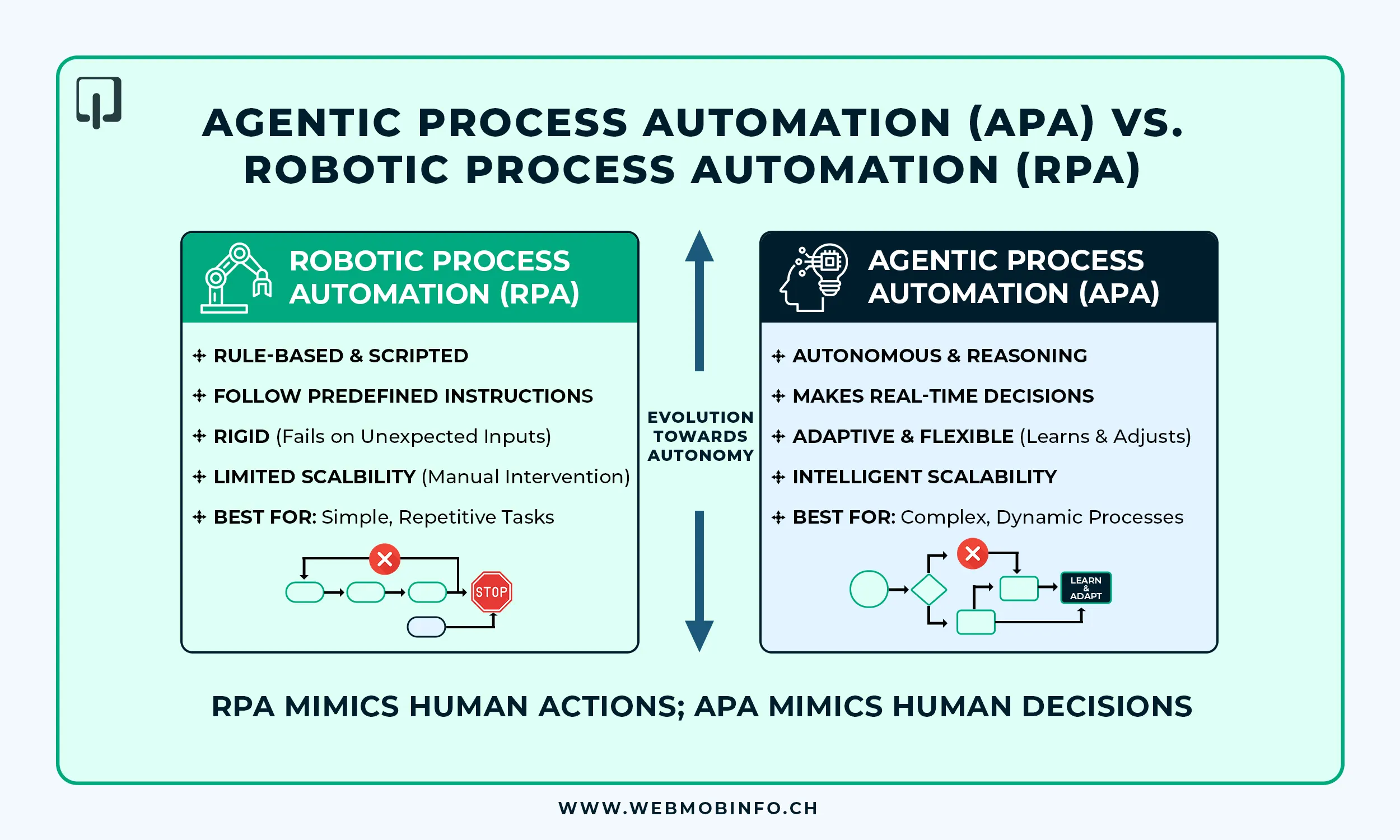
To understand this, let’s compare it with RPA. Traditional RPA bots are rule-based. They perform repetitive tasks by following set instructions, whether it's extracting data from a database or filling out forms. However, when things don’t go as expected, these bots can’t adapt or make decisions. Agentic Automation, on the other hand, introduces AI agents that can dynamically adjust and make decisions in uncertain environments, much like a human would.
At the core of Agentic Process Automation is Agentic AI. This framework consists of intelligent agents capable of reasoning, learning, and adapting to changing conditions. Here’s how it works:
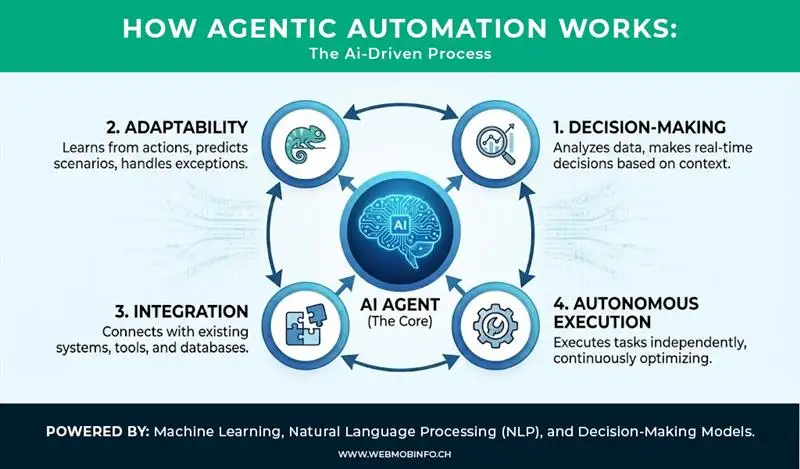
The technology stack behind Agentic Automation often includes machine learning algorithms, natural language processing (NLP), and decision-making models, all working together to make real-time, autonomous decisions.
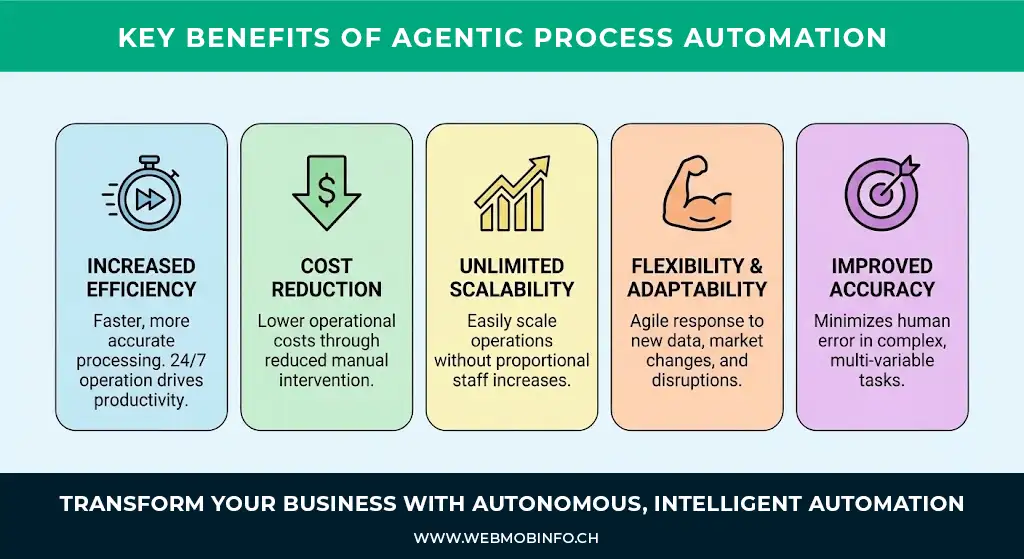
There are numerous advantages to adopting Agentic Process Automation. Some of the key benefits include:
At first glance, both AI agents and RPA bots automate processes, but they operate in fundamentally different ways:
While RPA is effective at automating simple, repetitive tasks, Agentic Automation excels at dynamic decision-making and adaptability, making it well-suited to more complex business processes.
With any automation technology, security is a top concern. Agentic Process Automation is no different. Here's why it’s secure:
Working with an experienced AI Automation agency ensures that the right security measures are in place during the implementation of Agentic Automation systems.
Agentic Process Automation is already revolutionizing several industries. Here are a few examples:
Integrating Agentic Automation into your business operations is a step-by-step process. Here’s how to get started:
.webp)
To summarize, here are the core differences between Agentic Automation and traditional RPA:
Agentic Process Automation refers to the use of AI agents to autonomously handle business processes, making real-time decisions and adapting to changing conditions. Unlike traditional RPA systems that follow predefined rules, Agentic Automation leverages Agentic AI to create more intelligent, flexible, and scalable automation solutions for businesses.
Agentic Automation utilizes AI agents that process vast amounts of data, learn from previous actions, and make decisions based on context and real-time inputs. These AI agents in automation can adapt to unforeseen circumstances, improving efficiency by continuously evolving and optimizing workflows without human intervention, making them ideal for dynamic business environments.
While RPA bots are designed to automate repetitive tasks based on predefined rules, AI agents in Agentic Automation can make decisions, learn from data, and adapt to changing environments. AI agents are autonomous and intelligent, while RPA bots can only execute tasks as instructed, with no learning capabilities.
Agentic Process Automation boosts business efficiency by automating complex decision-making tasks, reducing human error, and driving cost savings. With Agentic AI, businesses can scale their operations seamlessly, improve process accuracy, and adapt quickly to market changes. It also enhances flexibility by enabling systems to make real-time adjustments when needed.
Yes, Agentic Process Automation is built with robust security features to ensure data integrity and compliance with industry regulations. AI agents are equipped with encryption and privacy protocols to protect sensitive data. By partnering with an experienced AI Automation agency, businesses can ensure secure and compliant implementation of Agentic Automation.
To implement Agentic AI, start by identifying key processes that can benefit from autonomous business process automation. Choose a reliable AI Automation company that offers AI development services. After integrating AI agents into your systems, monitor and refine the automation over time to ensure continuous optimization and efficiency improvements.

As we've explored throughout this blog, Agentic Process Automation represents a significant advancement in the way businesses automate operations. Moving beyond traditional RPA, Agentic Automation brings the power of AI agents to the forefront, enabling autonomous business process automation that can make real-time decisions, adapt to change, and optimize efficiency across industries. Agentic AI is reshaping how businesses handle complex tasks, offering AI-driven solutions that are far more flexible, scalable, and intelligent than previous automation tools.
While RPA remains valuable for simple, rule-based tasks, the differences between Agentic Automation and RPA are clear. Agentic Automation empowers businesses to tackle dynamic, unpredictable environments where AI agents in automation can learn, evolve, and improve over time.
At Webmob Software Solutions, we understand the immense potential of Agentic Process Automation. As a leading AI Automation company, we specialize in delivering AI development services that drive innovation through cutting-edge automation. Our AI Automation agency is committed to helping businesses implement Next-Gen RPA solutions powered by Agentic AI, ensuring that your operations remain efficient, secure, and future-ready.
Are you ready to explore how Agentic Automation can transform your business? Contact us today and let’s discuss how we can integrate AI agents into your processes to help you achieve smarter, more efficient workflows. Get in touch with our AI experts now!

Let’s discuss and plan how we can accelerate your growth. Fill out this form and take the first step towards constant advancement.

We will respond to you within 24 hours.
Access to dedicated product specialists.




.png)

