In today’s fast-paced world, businesses are constantly seeking ways to deliver better service, increase efficiency, and enhance the customer experience. One of the most effective solutions gaining traction across industries is conversational AI. But what exactly is conversational AI, and why is it so important?
Conversational AI refers to the set of technologies that enable computers to interact with humans using natural language. Through sophisticated algorithms, these systems can understand, process, and respond to human queries in a way that mimics human conversation. From customer service chatbots to voice-activated assistants, conversational AI is transforming how businesses operate and engage with customers.
Whether in customer support, sales, or internal operations, businesses are increasingly using conversational AI to enhance user interactions. Imagine being able to resolve customer inquiries instantly, process orders, or guide users through complex tasks, all without human intervention. Conversational AI is the tool that enables these capabilities.
At its core, conversational artificial intelligence is a technology that empowers machines to hold human-like conversations with users. Unlike traditional systems, which rely on scripted responses or decision trees, conversational AI is built to understand and generate human language using techniques such as natural language processing (NLP) and machine learning (ML).
Conversational AI vs. Traditional Chatbots: Traditional rule-based chatbots operate on predefined paths and can only respond to specific keywords or commands. While these systems have their place, they lack the flexibility to handle complex or nuanced conversations. In contrast, conversational AI systems can process various inputs and generate responses based on context, tone, and meaning, providing a far more dynamic and engaging user experience.
Examples of conversational AI include chatbots, voice assistants, and apps that can interact with users in real time, answer questions, and provide assistance across a variety of platforms, from websites to mobile applications.
To understand how conversational AI works, let’s break it down into the key technologies that make it possible:
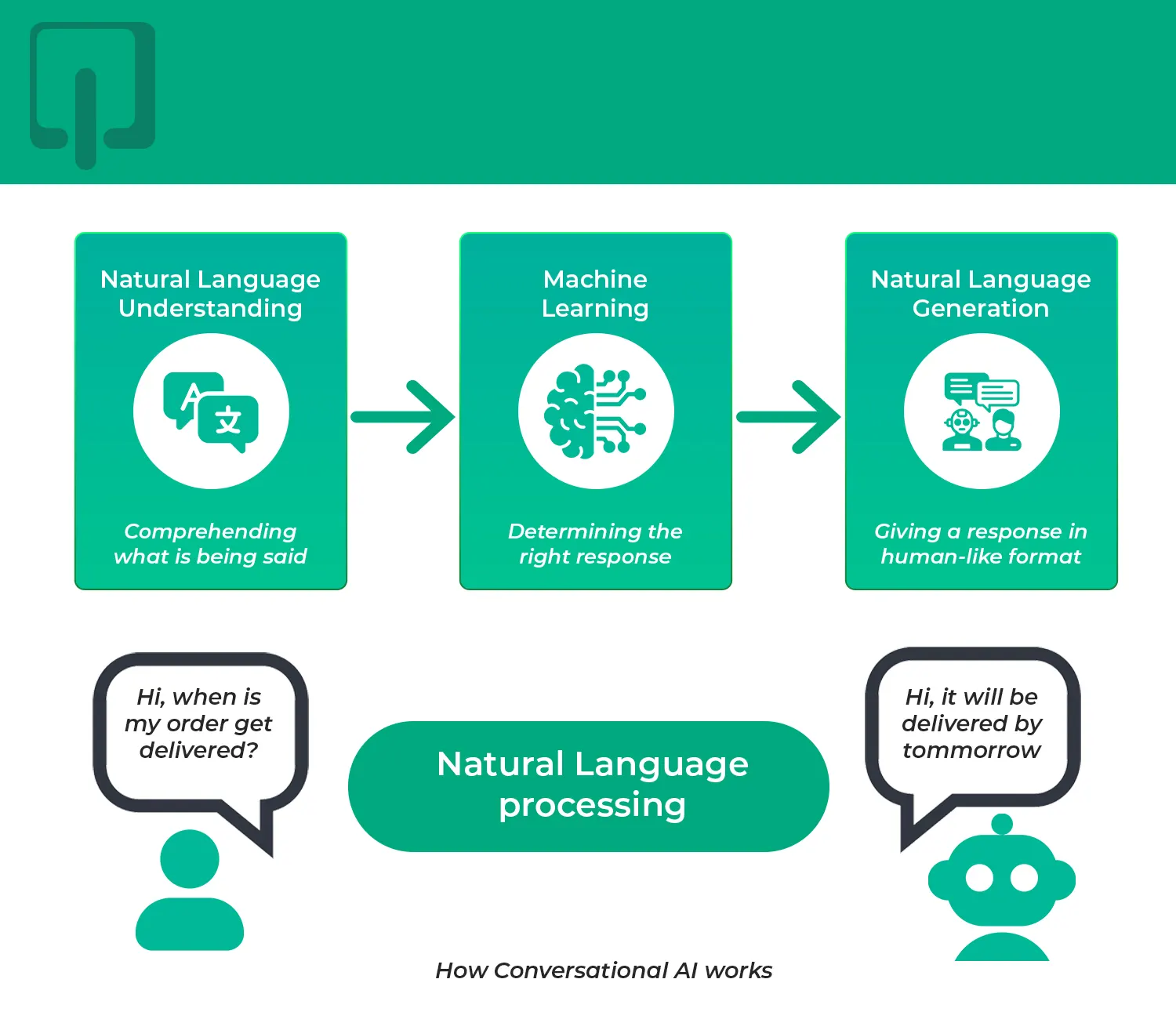
In practice, conversational AI processes a user’s input (text or speech), understands its intent, and generates a relevant response. For example, if a customer asks a chatbot about store hours, the AI will recognize the query, extract the relevant information, and provide a response such as, “Our store is open from 9 AM to 9 PM daily.”

Modern conversational AI is more than just a tool for answering basic questions. It is a sophisticated system with the following core capabilities:
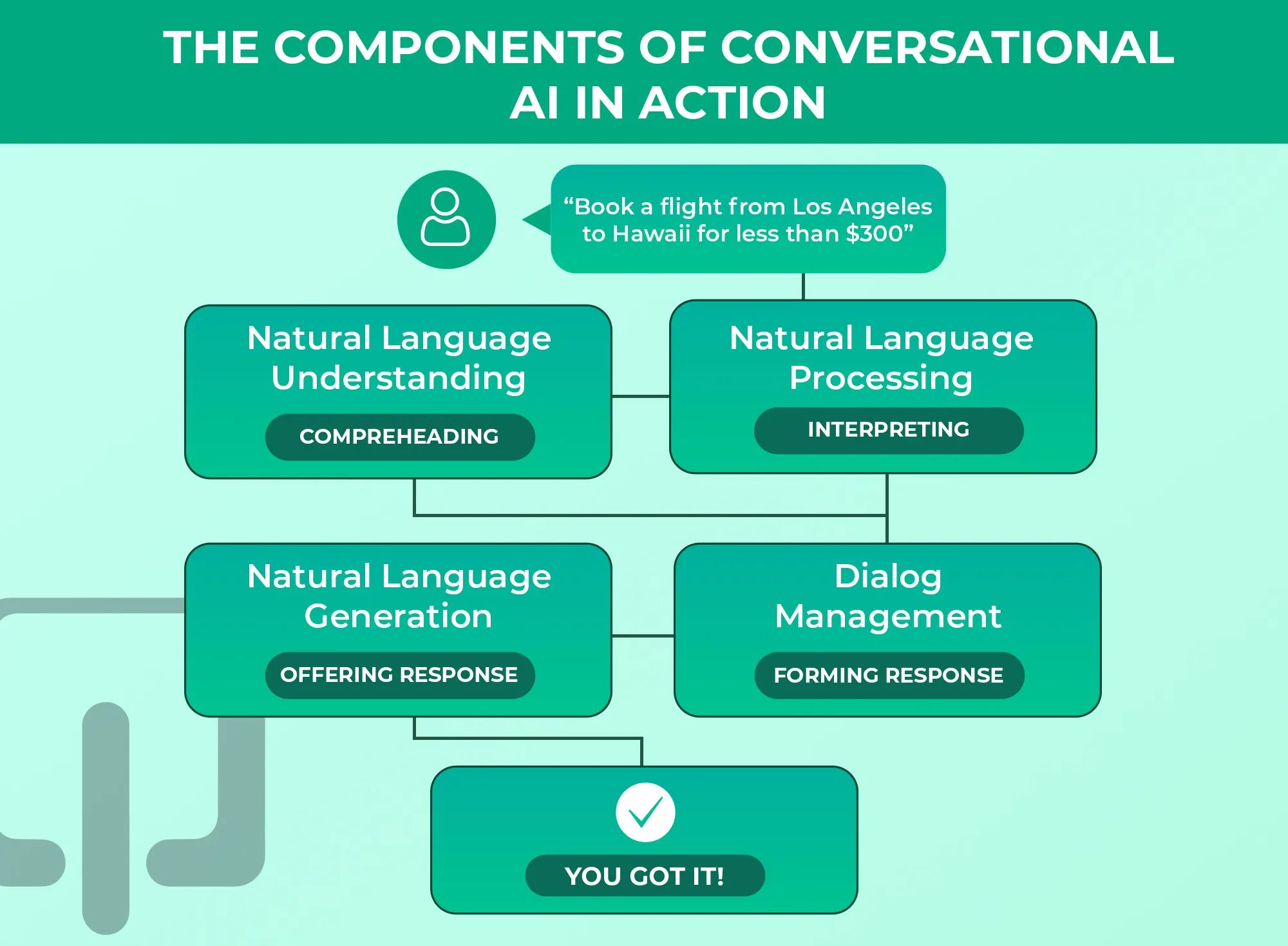
The use cases for conversational AI are vast and diverse. Here are some key areas where it is making a significant impact:
The world of conversational AI is not one-size-fits-all. Several types of conversational AI solutions cater to different needs:
At this point, you may be wondering about the difference between conversational AI and Generative AI. While both are related, they serve different functions.
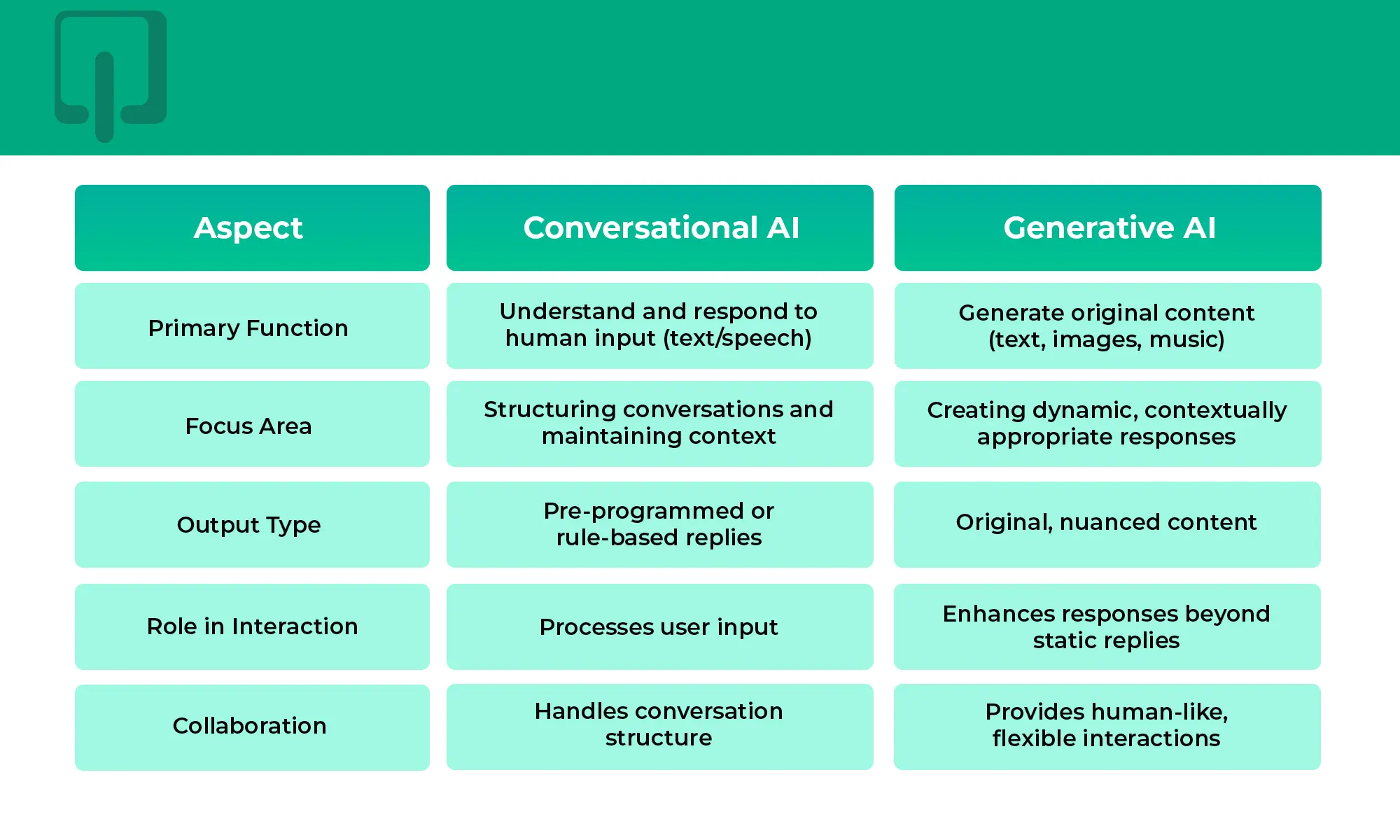
The two work together to enable more flexible, intelligent conversations. While conversational AI focuses on processing user input, Generative AI enables systems to provide nuanced, context-aware responses that go beyond simple pre-programmed replies.
The advantages of implementing conversational AI are clear:
While conversational AI offers tremendous benefits, it’s not without its challenges:
When selecting a conversational AI company or AI development company, it’s crucial to choose a partner with the right expertise. Look for:
At Webmob Software Solutions, we specialize in developing and deploying advanced conversational AI solutions for businesses of all sizes. From AI chatbots to enterprise-level platforms, we provide AI consulting services that help organizations improve customer engagement, streamline operations, and reduce costs.
Our team works with Generative AI development companies to create dynamic, scalable AI solutions tailored to your needs. Whether you’re looking for a simple chatbot for customer service or a complex enterprise conversational AI platform, we have the expertise to bring your vision to life.

Conversational AI is a technology that enables machines to understand and respond to human language, whether in text or voice. It combines NLP, machine learning, and sometimes Generative AI to manage real conversations. Businesses use it for customer support, sales queries, internal helpdesks, and automated processes. It allows users to interact naturally without complex commands, making communication smoother and more effective.
Conversational AI processes user input through NLP or ASR, identifies the intent, and then produces a response using trained models or Generative AI. During this process, it considers context, previous exchanges, and available data sources. This helps the system reply in a way that feels natural and consistent. Real-time systems often integrate with business databases to provide accurate, up-to-date responses to customer or employee questions.
Businesses gain faster support response times, reduced operational costs, and improved customer satisfaction. Conversational AI handles high interaction volumes without fatigue, giving users round-the-clock assistance. It also helps sales teams by qualifying leads, addressing common questions, and directing users to the right resources. For internal teams, it reduces repetitive workloads by automating HR and IT queries, allowing employees to focus on more valuable tasks.
Rule-based chatbots follow fixed scripts and respond only when users match specific keywords. Conversational AI goes far beyond this by understanding context, interpreting intent, and generating responses based on learned patterns. It adapts during conversations, manages varied inputs, and handles complex queries. This allows businesses to offer smoother, smarter interactions where users feel understood rather than restricted by rigid branches or predefined command structures.
Enterprises use conversational AI in customer service, sales automation, HR helpdesks, IT support, healthcare triage, retail guidance, and financial advisory tools. It can assist website visitors, mobile app users, employees, or customers engaging through messaging channels. When integrated with CRM or ERP systems, it can pull real data, update records, schedule meetings, and provide tailored responses. This makes it valuable for both external and internal communication needs.
Enterprises should look for a partner with proven experience, solid technical depth, and the ability to integrate AI with existing systems. The partner must offer strong NLP capability, multilingual support, data privacy safeguards, and dependable post-deployment guidance. It is also important to understand how the provider handles model training, updates, and custom logic. A strong partner creates solutions that align with business goals and long-term growth plans.
Conversational AI is revolutionizing the way businesses interact with their customers. By leveraging advanced technologies such as NLP, machine learning, and Generative AI, businesses can automate routine tasks, improve customer satisfaction, and scale operations without compromising quality. As conversational AI continues to evolve, businesses that adopt these solutions will have a competitive edge in today’s rapidly changing marketplace.
Are you ready to explore how conversational AI can benefit your business? Reach out to us today, and let’s discuss how we can help you build the perfect AI solution for your needs.

Let’s discuss and plan how we can accelerate your growth. Fill out this form and take the first step towards constant advancement.

We will respond to you within 24 hours.
Access to dedicated product specialists.