Real estate has always been seen as a stable and trusted asset class. It offers long-term value, predictable income, and a sense of security that many investors appreciate. Yet for decades, access to property investment has remained limited. High capital requirements, slow transactions, and geographic barriers have kept many people out.
That is changing. Real estate tokenization is reshaping how property ownership works and who can participate. By bringing Real World Assets (RWA) onto blockchain infrastructure, real estate is becoming more accessible, transparent, and flexible.
If you are a business leader, fund manager, or property owner, you might be asking a simple question. How does this actually work in 2026, and what does it mean for my organization? Let me explain.
In 2026, real estate tokenization is no longer a concept reserved for pilots or controlled experiments. It is becoming a structured approach to property ownership and investment. Tokenized real estate allows physical properties to be represented as digital tokens on a blockchain. Each token reflects a defined economic or ownership right linked to the underlying asset.
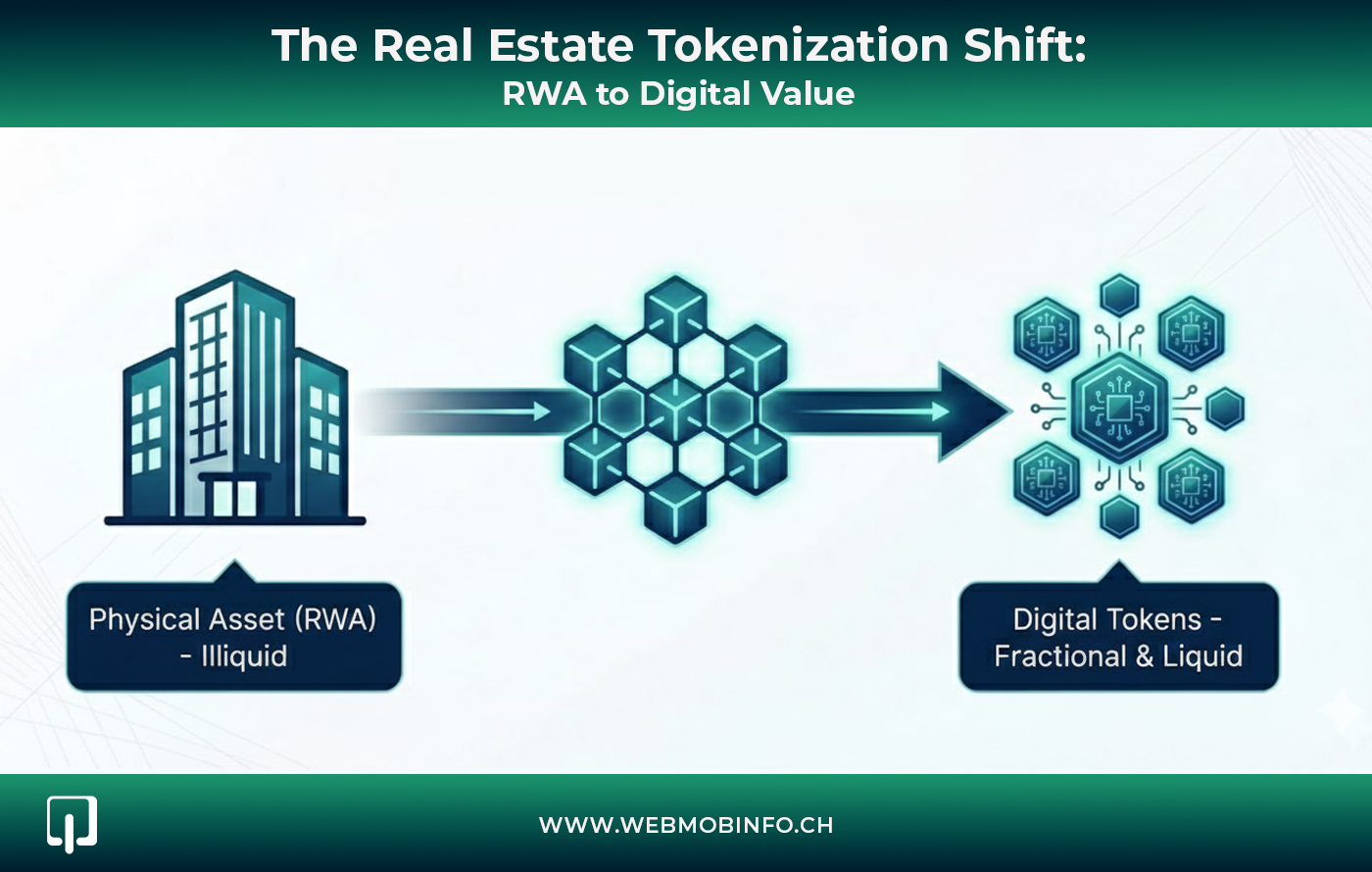
This shift is not about replacing real estate. It is about rethinking how ownership is recorded, transferred, and shared. Instead of paper-heavy processes and intermediaries, transactions are handled through programmable systems that increase clarity and reduce friction.
Real-world assets have inherent value but often lack liquidity. Property, private credit, and infrastructure assets can take months to sell or refinance. Blockchain-based systems change that dynamic.
RWA tokenization allows assets to be divided into smaller units, recorded immutably, and transferred with defined rules. For institutions, this brings better capital efficiency. For investors, it offers access to assets that were previously out of reach.
The movement of Real World Assets onto blockchain infrastructure is driven by efficiency, trust, and the demand for better asset management tools.
Tokenized real estate changes the relationship between owners and investors. Ownership is no longer limited to full property deeds. It can be fractional, programmable, and governed by code-defined rules.
This model supports broader participation:
For many firms, this shift is no longer theoretical. It is operational.
Real estate tokenization is the process of converting ownership rights in a property into digital tokens recorded on a blockchain. These tokens represent economic value, governance rights, or both. The underlying property remains physical, but ownership records become digital.
Real World Assets give tokens real value. Without a verified asset behind them, tokens are just data. In real estate tokenization, the property, its valuation, and its legal structure anchor the digital representation.
By 2026, real estate investment will no longer be limited to a small group of high-net-worth investors. Market conditions, investor expectations, and technology have aligned to make tokenized real estate a practical and attractive option. The growth is steady, driven by access, efficiency, and clearer ownership structures rather than speculation.
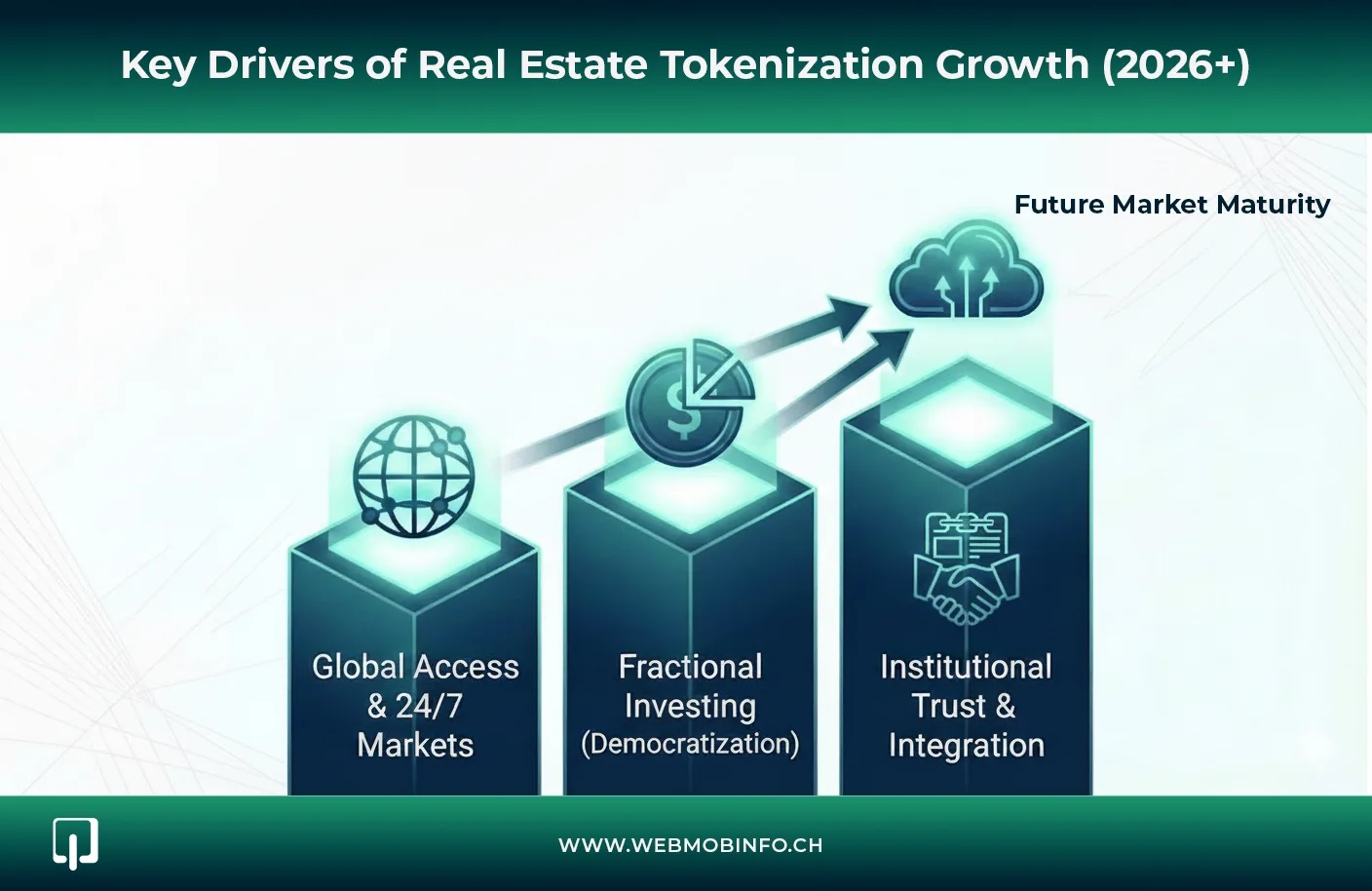
Fractional Real Estate Investment allows investors to participate with smaller amounts of capital. This opens the market to a broader audience, including younger investors and international participants.
Blockchain systems are borderless by design. Tokenized real estate platforms can support investors from multiple jurisdictions, subject to compliance rules.
Token transfers settle faster than traditional property transactions. Entry barriers are lower, documentation is more precise, and ownership records are easier to verify.
These factors together explain why RWA tokenization is gaining steady traction.
Not every property serves the same investment purpose, and that is why tokenization applies across different real estate categories. By matching asset type with the right ownership and income model, tokenized structures can support both stability and growth while meeting diverse investor expectations.
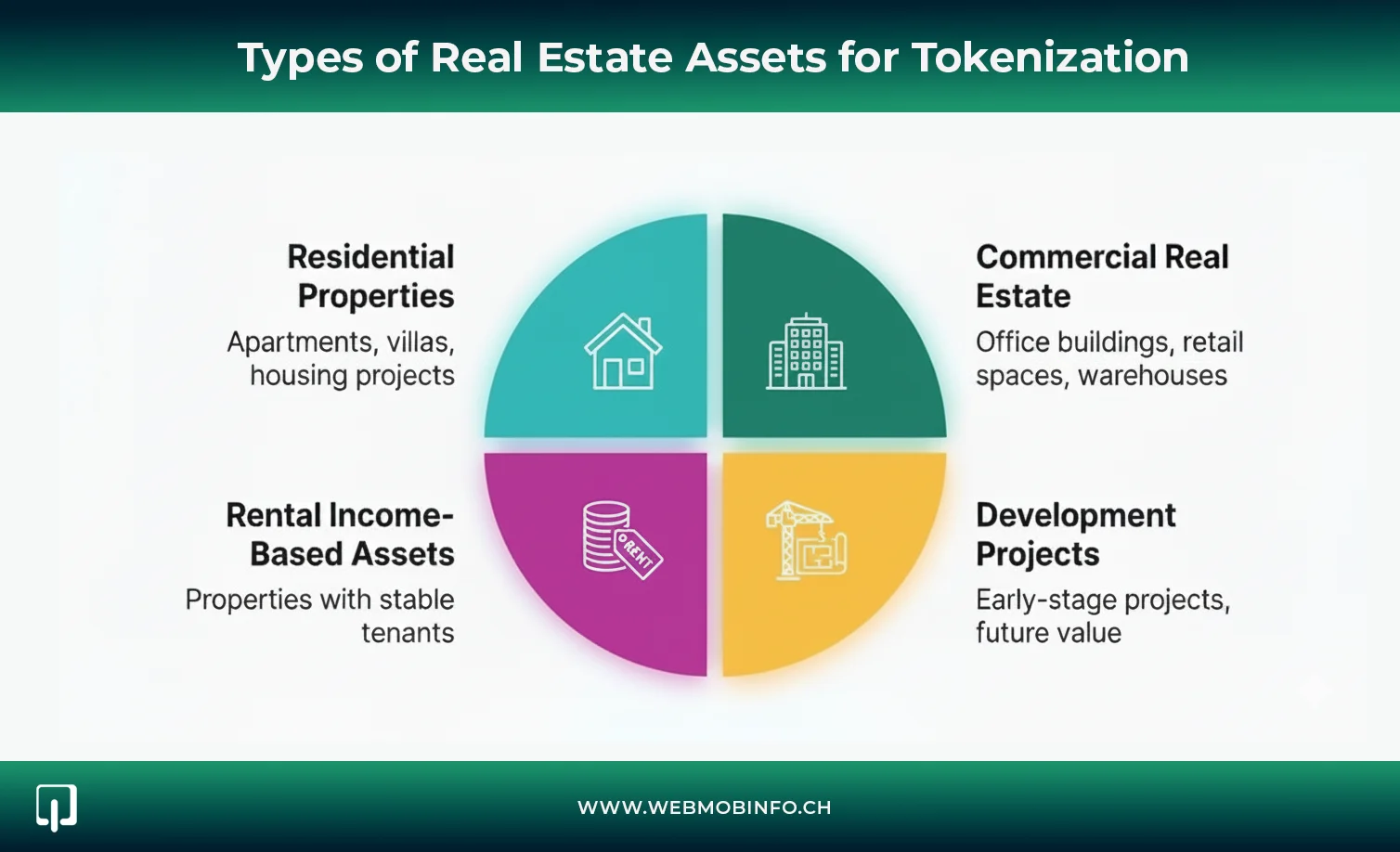
Apartments, villas, and housing projects can be tokenized to support rental income sharing or capital appreciation models.
Office buildings, retail spaces, and warehouses are common candidates due to predictable cash flows. Innovations in AI and data analytics are further enhancing how these assets are managed.
Properties with stable tenants are often structured to distribute rental income directly to token holders.
Early-stage projects can raise capital through compliant token issuance linked to future value.
Each of these falls under Real World Assets supported by Blockchain Real Estate frameworks.
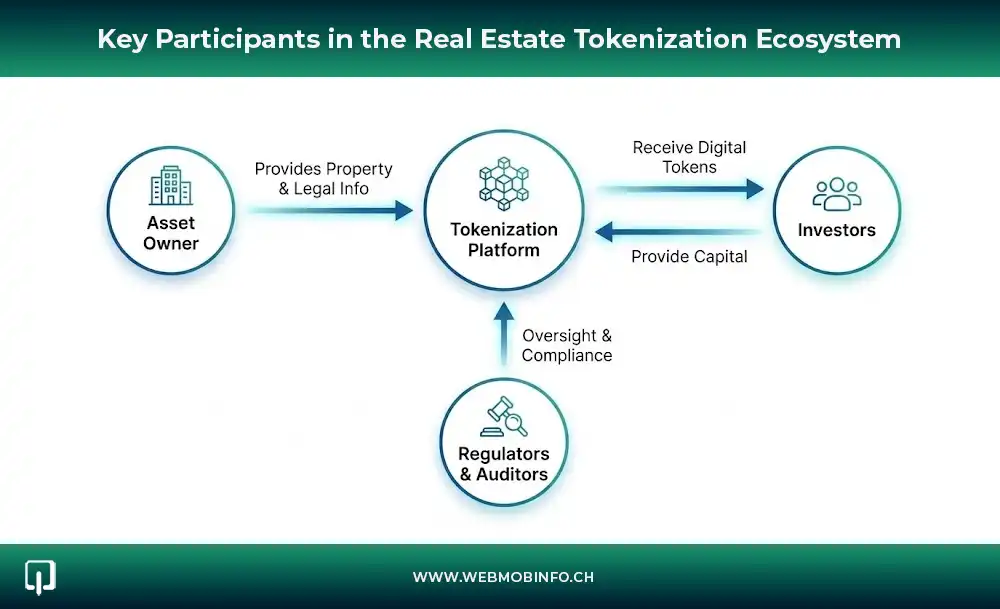
Legal and regulatory clarity forms the foundation of any real estate tokenization initiative. Since tokenized assets represent real economic value, compliance is not a formality but a requirement that protects investors, asset owners, and platform operators across jurisdictions.
Before tokenization, ownership must be clearly verified. This includes title checks, encumbrance reviews, and valuation reports.
Real estate laws differ across regions. Tokenization platforms must respect securities laws, investor eligibility rules, and reporting obligations.
Security Token Offerings remain a preferred structure for compliant real estate tokenization. Many firms look toward specialized asset tokenization platform development to embed compliance at the protocol level.
Legal clarity is not optional. It is foundational.
Before any tokens are issued, a real estate asset must undergo a structured, well-defined process. In 2026, successful real estate tokenization depends on precise sequencing, legal certainty, and technical discipline. Each step builds on the previous one, reducing risk and improving long-term viability.
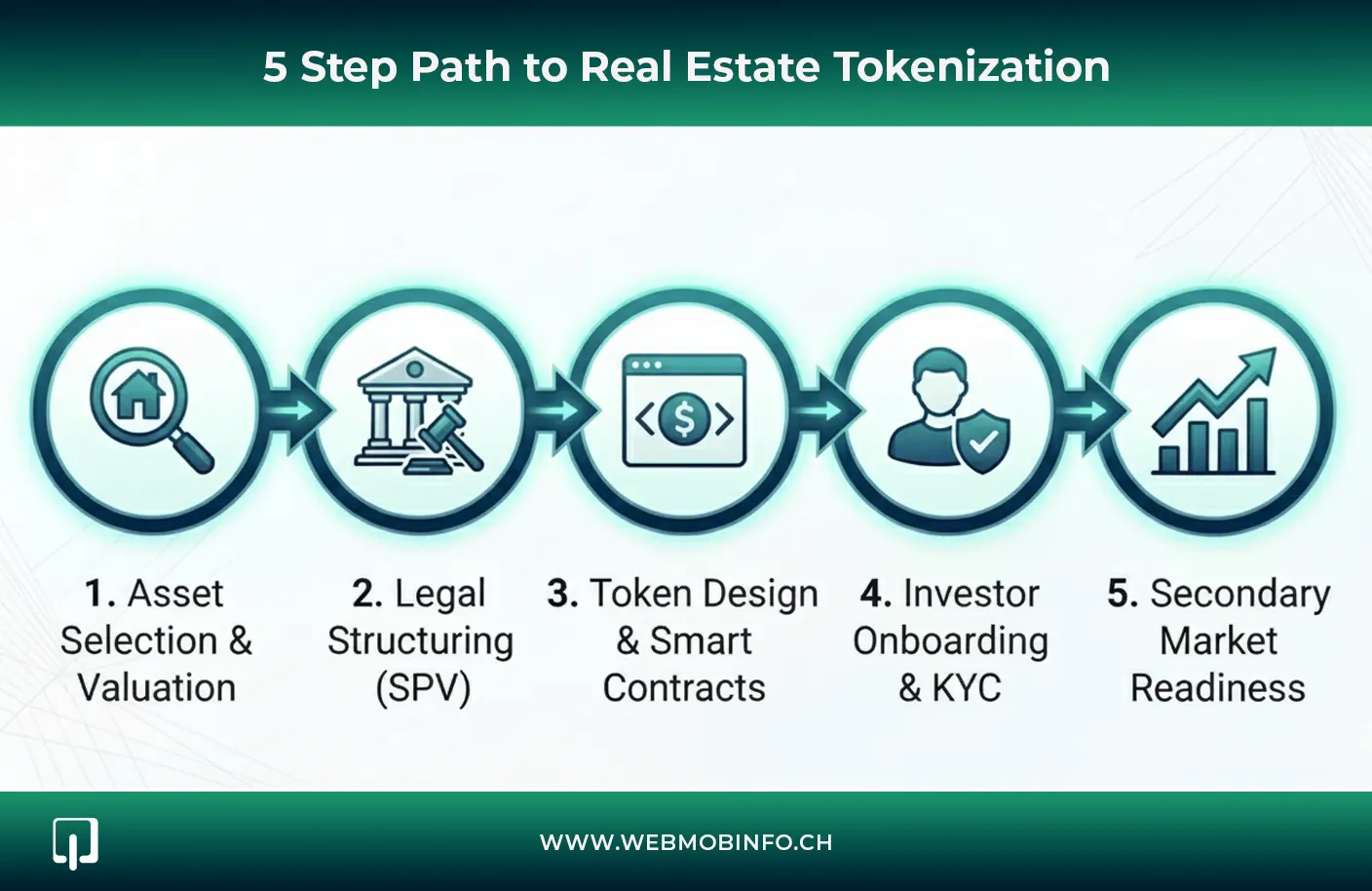
The process begins with choosing the right property. Assets with clear ownership, stable cash flows, and strong market demand are preferred. Independent valuation is essential, as token pricing and investor confidence depend on accurate asset assessment.
Once the asset is selected, it is placed within a legal structure such as an SPV or trust. This entity becomes the link between the physical property and the digital tokens. Legal rights, revenue entitlements, and investor obligations are defined at this stage.
Tokens are then designed to represent specific rights. This may include ownership interests, profit-sharing, or rental income claims. Supply limits, transfer conditions, and distribution rules are clearly defined and implemented through smart contract logic.
Investors are onboarded through structured KYC and eligibility checks. Jurisdiction rules, accreditation requirements, and holding limits are applied before any token allocation takes place. This ensures compliance from the first transaction.
Finally, the platform is prepared for post-issuance activity. Transfer rules remain active, compliance checks continue, and liquidity planning is addressed. This step ensures that tokens remain usable, tradable, and regulated after launch.
Together, these steps outline how to tokenize real estate in a controlled, compliant, and commercially sound manner.
Blockchain plays a central role in real estate tokenization by acting as the system of record for ownership, transactions, and compliance rules. It replaces fragmented databases and manual reconciliation with a shared, tamper-resistant ledger that all stakeholders can rely on. Through blockchain, property ownership data becomes transparent, verifiable, and consistent across participants. Public and permissioned networks allow platforms to balance reach with regulatory control, depending on the asset and investor profile. Real estate smart contracts run on top of this infrastructure, automating ownership transfers, income distribution, and rule enforcement without relying on intermediaries. As a result, Blockchain Real Estate platforms offer clearer audit trails, faster settlement, and stronger trust across the entire token lifecycle.
A mix of technical, legal, and operational factors shapes the cost.
Selecting the right development partner is one of the most important decisions in a real estate tokenization project. The technology may be advanced, but long-term success depends on experience, regulatory awareness, and the ability to support the platform after launch.
A partner with real estate and blockchain experience understands asset structuring, investor expectations, and regulatory realities. This reduces execution risk and prevents costly design changes later.
Strong security practices and compliance frameworks are essential. This includes smart contract audits, access controls, and continuous monitoring to protect both assets and investors.
Tokenized platforms require ongoing support as regulations evolve and user activity grows. Reliable post-launch maintenance ensures stability, updates, and operational confidence.
Organizations planning to build at scale often choose to hire blockchain developers for real estate who can support both technical execution and long-term platform reliability.
As tokenized property models mature, the focus is shifting from early adoption to long-term integration with established financial systems. Beyond 2026, tokenized real estate is expected to move from isolated platforms into broader investment and capital market structures, supported by clearer regulations and institutional participation.
Large asset managers, funds, and custodians are beginning to treat tokenized real estate as a formal allocation category. This brings stronger governance, standardized reporting, and greater market confidence.
Tokenization continues to lower geographic barriers, allowing investors to access property markets outside their home regions while staying within compliant frameworks.
Banks, trustees, and custodial services are developing systems that connect tokenized assets with existing financial infrastructure. This convergence supports liquidity, risk management, and broader market participation.
Together, these trends suggest that tokenized real estate will become a structured and recognized part of global investment portfolios rather than a niche offering.
Real estate tokenization has moved from concept to execution. In 2026, it will offer a practical way to bring Real World Assets (RWA) onto blockchain systems with clarity, control, and regulatory discipline. From Fractional Real Estate Investment to faster settlement and global access, tokenized real estate addresses long-standing gaps in traditional property investment. When done right, blockchain real estate, supported by real estate smart contracts, improves transparency, reduces friction, and creates new capital pathways. Understanding how to tokenize real estate now requires more than technical curiosity. It requires legal structure, platform decisions (such as white-label vs. custom tokenization), platform costs, and long-term operational planning.
At Webmob Software Solutions, we work closely with asset owners, enterprises, and global firms to turn these ideas into working platforms. As a trusted real estate tokenization development company, we deliver compliant and production-ready solutions across RWA tokenization, Custom real estate STO platform development, and secure token infrastructure. Our teams help you design, build, and operate platforms that reflect your asset strategy, regulatory scope, and growth plans. From platform architecture to investor onboarding, our RWA tokenization development services are built for real-world execution, not theory.
If you are planning a real estate tokenization initiative or evaluating your next steps, now is the right time to act.
Talk to our experts to hire blockchain developers for real estate and build a compliant, scalable tokenization platform with confidence.
Real estate tokenization is a method of converting ownership or economic rights of a physical property into digital tokens recorded on a blockchain. Each token represents a defined share of the asset or its income. This structure allows property ownership to be divided, tracked, and transferred digitally while the underlying real estate remains legally owned.
Tokenized real estate can be legally compliant when structured in accordance with existing property and securities regulations. This usually involves clear ownership documentation, investor eligibility checks, and regulated issuance models, such as security token issuance. Compliance requirements vary by jurisdiction, which makes legal planning and regulatory alignment essential from the very beginning.
The type of investors allowed depends on local laws and the structure of the offering. Some tokenized real estate projects are open only to accredited or institutional investors, while others allow limited retail participation. Investor eligibility is defined through compliance checks during onboarding to ensure regulatory adherence.
The timeline for tokenizing a property depends on several factors, including legal structuring, regulatory approvals, platform development, and asset preparation. In many cases, the process can take a few months. Projects involving multiple jurisdictions or complex assets may require additional time to complete properly.
A custom platform is not always required at the start. White-label solutions can support standard use cases and enable faster launches. However, projects with complex compliance needs, unique asset structures, or long-term scaling plans often benefit from custom development that offers greater control and flexibility.

Let’s discuss and plan how we can accelerate your growth. Fill out this form and take the first step towards constant advancement.

We will respond to you within 24 hours.
Access to dedicated product specialists.



.png)
.png)